
Gaston County Parole and Probation
Probation, parole, and post-release supervision can all place a person in the community under NCDAC Community Supervision, but they arise at different points. Probation is a court-imposed sentence or part of one and does not necessarily follow a prison term. Parole is discretionary release available mainly in older or otherwise parole-eligible cases. Post-release supervision is the modern mandatory supervision period that follows prison confinement for many structured-sentence felonies.
| Status | How it begins | Best public check |
|---|---|---|
| Probation | A court orders supervision instead of, or along with, confinement. | NCDAC OPI probation/parole/post-release status and the court case. |
| Parole | The Parole Commission authorizes release in a legally eligible case. | NCDAC OPI movement and supervision status, plus official Commission material. |
| Post-release supervision | A qualifying prisoner leaves confinement at the statutory point but remains under supervision. | NCDAC OPI inmate status, Actual Release Date, movement, and active supervision status. |
A Gaston County Jail Release Date confirms the end of that local booking. It does not establish probation or parole. Conversely, an NCDAC Active Inmate result means the person remains in state prison, even if the Gaston booking has ended through a transfer.
How to Verify Gaston County Post-Release Supervision
The main public route is NCDAC Offender Public Information. It contains state prison, probation, parole, and post-release information, including records dating back to 1972. It does not cover a person whose only custody was a county or city jail.
- Search by offender number when known. Otherwise use surname and given name, then narrow with birth date or age and other available fields.
- Start with “All” if the custody category is uncertain. Try Active Probationer/Parolee for current supervision and Inactive for a former supervisee.
- Open the matching record and compare identifying details. Do not choose a result by name alone.
- Read both Inmate Status and Probation/Parole/Post Release Status. A person can be inactive as an inmate but active under community supervision.
- Review Last Movement and Last Movement Date, then inspect sentence blocks for Actual Release Date and service status.
- Contact Community Supervision Judicial District 27 when the public record needs current office confirmation.
A coherent prison-release record commonly combines inactive inmate status, a release-type movement and date, an Actual Release Date on the completed sentence, and an active supervision status if supervision followed confinement. A future Projected Release Date alone is not proof that release occurred. For the county booking side, the Gaston County released-inmate search and record guide explains how to find the booking’s actual Release Date.
Note: An active supervision result can follow prison release, so read inmate and probation/parole statuses together before describing the person’s current status.
Gaston Post-Release Office in District 27
NCDAC assigns Gaston County to Community Supervision Judicial District 27. The published local directory should be checked before relying on a staff name because assignments can change.
NCDAC Community Supervision, Judicial District 27
2575 Pembroke Road
Gastonia, NC 28054
704-833-1294
Fax: 704-833-1297
This Gastonia office is local, but it is not exclusive to Gaston County. District 27 also serves Cleveland and Lincoln counties. The office can clarify local supervision routing; it is not the custodian of the Gaston jail’s booking release record.
Gaston County Absconded Probationer Search
NCDAC provides a separate Absconded Probationer Search that can be filtered to County of Supervision “GASTON” and narrowed by surname. This is a meaningful county filter inside a statewide system. It is not the Sheriff’s general warrant list and does not show a person’s current physical location.
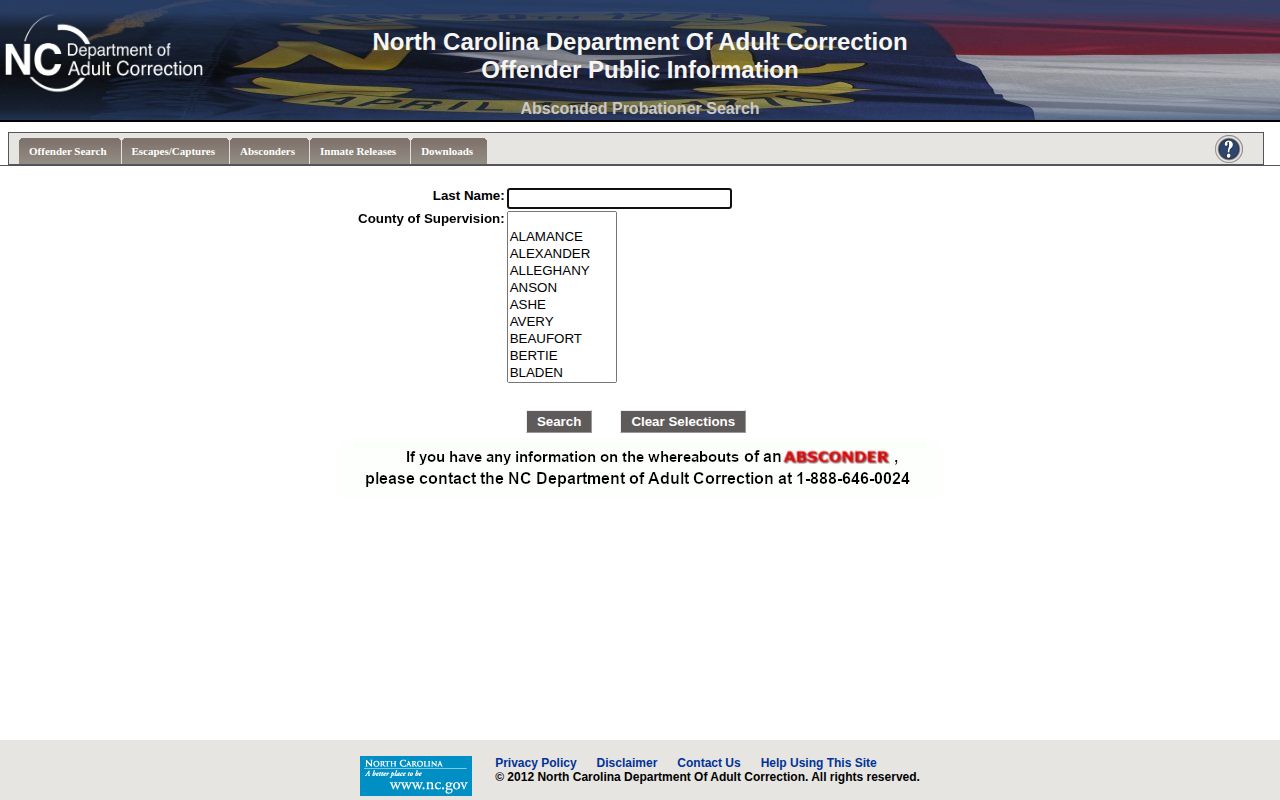
The official search screen demonstrates the correct supervision channel. An entry signals a reported supervision noncompliance status, not a fresh release or proof that a person is at any particular place.
Conditions differ by the sentence and Commission or court action. A violation can lead to investigation, changed conditions, sanctions, or revocation proceedings, but a public absconder result should not be expanded into an unsupported claim about the outcome. Confirm case-specific status with NCDAC and use the court record where a judicial action is involved.
Note: An absconder entry reports supervision noncompliance; it does not show a fresh release date, current location, or general Sheriff warrant.
North Carolina Parole Review for Gaston Cases
North Carolina does not use the formal parole-hearing model that many people expect. The Post-Release Supervision and Parole Commission states that it does not hold formal hearings and does not meet personally with offenders during parole review. There is therefore no forward public hearing calendar to use for a Gaston County case.
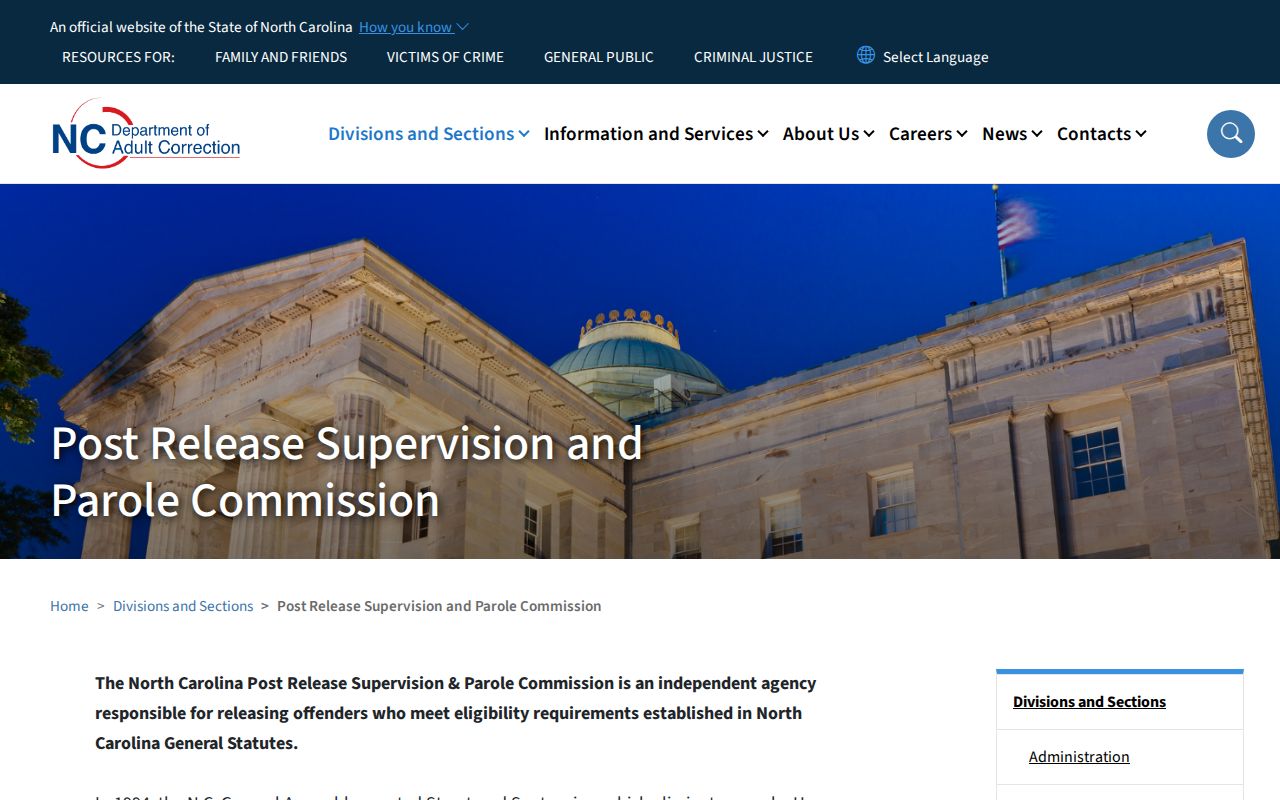
The Commission page is the source for that process distinction. Court dates should not be substituted for parole-review hearings, and a projected release field should not be mislabeled as a Commission decision.
For eligible cases, review generally occurs at least annually after eligibility, with separate rules for certain case types. The official Discretionary Parole Reviews page publishes monthly retrospective files beginning in September 2024. These files are not a schedule of personal appearances and not a person-level decisions search.
Reported outcome categories include regular parole, community service parole, early medical release, 90-day mandatory parole, incomplete decision, suspend decision, and statutory denial reasons. G.S. 15A-1371 governs eligibility for qualifying sentences, while ordinary discretionary parole was eliminated for most offenses committed on or after October 1, 1994 under Structured Sentencing.
Gaston Reentry Council After Release
NCDAC’s Local Reentry Councils directory lists a Gaston Local Reentry Council with 704-349-4168, 704-854-8934, and 704-349-4167, along with council email contacts. It is best described as a reentry navigation and coordination contact. The directory warns that funding changes can affect local council coverage, so a caller should refresh the listing and call ahead rather than assume a certain service or benefit is available.
The council and District 27 serve different roles. The council can help a person navigate reentry contacts, while Community Supervision administers legal supervision. Neither replaces the Sheriff for an entry/release summary or NCDAC OPI for a state custody status.
Note: Refresh the council directory and call ahead because funding changes can affect local coverage and available reentry navigation.
Gaston Release and Supervision Alerts
NC SAVAN, also called VINE, is available through VINELink, its mobile application, and 1-877-627-2826. It supports custody notifications from county jails and the state offender system. A phone alert uses a four-digit PIN for acknowledgment, and unacknowledged calls may repeat for up to 24 hours under state policy.
Transfers matter. A person moving from Gaston County Jail to NCDAC may receive a new state offender identifier, and NCDAC cautions that registration may be needed on each offender ID. VINE does not supply a complete historical supervision file and does not cover BOP federal custody.
How Gaston County Supervision Ends
Release from prison and discharge from supervision are separate events. Post-release supervision or parole ends only when the controlling term is completed or the responsible authority records another lawful disposition. Probation likewise ends under the court and supervision record, not merely because an online jail booking is old or absent.
To document the end, return to NCDAC OPI and inspect the current probation/parole/post-release status, movement history, and sentence service fields. An Inactive label can describe a former inmate, a former supervisee, or both, so it must be read with dates and completed service status. If the public interface is insufficient, NCDAC accepts public-record requests for existing public state admission, release, sentence-length, and time-served information. Gaston Jail Administration remains the correct source for county booking release material.
Gaston Supervision Discharge Records
A complete verification may require more than the current OPI label. Save the offender number, full name as displayed, relevant sentence or docket, and movement dates before contacting NCDAC. A focused request for an existing admission date, release date, time-served entry, sentence length, or public supervision record is more precise than asking an agency to compile a new narrative.
NCDAC’s central contact is 214 W. Jones Street in Raleigh, with mailing address 5201 Mail Service Center, Raleigh, NC 27699-5201, and telephone 919-733-2126. The agency holds state prison and Community Supervision records. It does not hold Gaston County Jail entry/release summaries. Those belong with the Sheriff and county public-record channel.
Discharge also should not be inferred from a missing online result. A record may be inactive, outside a search view, corrected, or subject to a legal restriction. Likewise, a completed jail booking can coexist with active probation or post-release supervision. The decisive point is the status and date recorded by the authority responsible for that part of the sentence.
North Carolina public-record rules allow requests for existing nonexempt records but do not require an agency to create or compile a record that does not exist. Some Commission, juvenile, medical, sealed, and expunged materials remain confidential or restricted. Request only the record needed to confirm the supervision or discharge event and allow the custodian to apply the controlling law.
Keep the date labels distinct when saving the result. A county Release Date ends a Gaston booking. An NCDAC Actual Release Date ends the relevant prison sentence or confinement event. A supervision discharge date concerns the later community phase. Placing all three in a short timeline can reveal a normal sequence that looks contradictory when each system is viewed alone. If a transfer occurred, include the receiving agency rather than calling the first custodian’s closing date a community release.
For parole-eligible cases, confidentiality also limits what can be obtained from the Commission. The monthly review files give retrospective categories, but they do not waive confidentiality for the underlying Commission record. Use the public result at its stated level and avoid treating an incomplete or suspended decision as a final release authorization.
Note: Keep county release, state actual release, and supervision discharge dates separate when building a custody timeline.